Historical contingency and an herbivorous calamity

This post was chosen as an Editor's Selection for ResearchBlogging.org

A while ago I asked, “What the hell was Australopithecus boisei doing?” To recap: there’s this weird side branch of human evolution that was dubbed “Australopithecus boisei” and lived in Eastern Africa from around 2.3 – 1.4 million years ago. They lived right alongside our ancestors, early Homo. Humans from around the world today are not as diverse as racists would have you think (really!), so you’d be totally blown away by the diversity of the early Pleistocene. Since 1959 when A. boisei (then Zinjanthropus boisei) was first discovered, people noticed its massive molar and premolar teeth, thick and powerful jaws, and muscle markings indicative of diabolical chewing power. ‘Probably subsisted on a diet of low-quality, hard to chew foods,’ people reasoned.

But a few years ago, this picture changed: evidence from toothwear and the chemical composition of teeth suggested A. boisei was actually eating grass or sedges (see the referred post or a nice recent review by Julia Lee-Thorp for more info). Such a diet is totally at odds with what people had hypothesized based on the size of the chewing muscles and teeth.

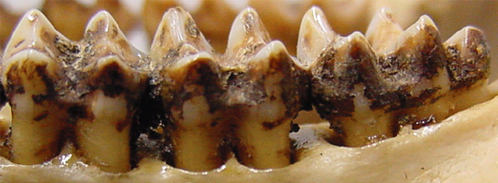
Colobus molars, good for shearing apart leaves. (image: http://bit.ly/xefm6t)

I was discussing this last point with a colleague the other day, who could not believe A. boisei ate grasses or the like: Many animals known to eat grass or leaves tend have molars with high crowns with slicing edges for shearing apart a mouthful of vegetation (above), but A. boisei molars are large and low-cusped, becoming fairly flat with wear (below).

Australopithecus boisei specimen KNM-ER 15930 (Leakey & Walker 1988, Figure 8)
But, it occurred to me, maybe high-crowned, shearing molars simply were not an ‘option’ in the evolution of Australopithecus boisei (see note below**). Natural selection is a powerful force of evolution, but it is limited because it can work only with existing variation: it does the best it can with what it’s got. The earliest surefire hominins, Australopithecus anamensis and afarensis, certainly did not have ‘cresty’ molars with pointy cusps, and neither did many late Miocene apes, for that matter. Rather, the ancestors of A. boisei had fairly low bulbous molar cusps, and that’s some serious evolutionary baggage for a hominid hoping to corner the grass and sedge market.
So we can draw up the following hypothesis for the evolution of A. boisei: as the early members of the species moved into a niche of eating grass/sedges, rather than evolve cresty teeth, they increased the size and enamel thickness of their ancestors’ molars to better-withstand their diet. Perhaps this was the ‘easiest’ solution to adapting teeth to a crappy diet (maybe some developmental constraint?). Or perhaps there’s another, yet unidentified food responsible for the species’ curiously high-C4 diet … who knows? Nota bene: this isn’t necessarily what I think happened, it’s just a hypothesis consistent with current evidence about A. boisei‘s anatomy and diet.
If Life on Earth has taught us anything, it’s that there are many ways to do the same thing. What’s more, evolution is highly constrained by pre-existing biology and historical circumstance. Australopithecus boisei may have been ‘a victim of its times,’ forced into an herbivorous niche for which it was ill-equipped.
READ MORE!
Leakey RE, & Walker A (1988). New Australopithecus boisei specimens from east and west Lake Turkana, Kenya. American Journal of Physical Anthropology, 76 (1), 1-24 PMID: 3136654
Lee-Thorp, J. (2011). The demise of “Nutcracker Man” Proceedings of the National Academy of Sciences, 108 (23), 9319-9320 DOI: 10.1073/pnas.1105808108
*Edited 07 Nov 2015
** This blog post was written in 2012. In 2016, Peter Ungar and Leslea Hlusko wrote more on this idea of boisei being constrained in its dental evolution here.

miRNA special reprint in Nature

A while ago I had a small post about RNA interference (RNAi), linking to a really awesome and educational animation and slideshow on the topic. Again, RNAi refers to gene regulation by very small strands of RNA. There are a number of types of RNA in your cells, and a several of these are involved in RNAi: in the last post I cursorily mentioned piwi-interacting RNAs (piRNA), small interfering (siRNA) and long intergenic non-coding (lincRNA).

One type I neglected to mention is “micro” (miRNA), and this is the one about which the journal Nature has a special on-line issue. miRNA, like other types in RNAi, binds to messenger RNA in cells to prevent gene translation. The special issue of Nature focuses on miRNA in various diseases involving tumors and skeletal abnormalities, and so far as I can tell, it’s completely free to all!

What really caught my eye about this issue is its highly interactive medium, produced by some company called zmags. This “zmag” (I guess you’d call it?) has been rendered so that you view and leaf through actual magazine-like pages in your browser. I’ve got a 1+ yr old Macbook and the 2-finger zoom on the trackpad also works within the browser. Want to read and mark up some of it in your preferred program? Well you can save selected pages from the issue as a pdf, giving you flexibility in what content you download (though I did have some issues with this). A while ago I noticed Nature also used a somewhat interactive in-browser, pdf-viewing app called Readcube, though I admit I haven’t really toyed with that program.

It’s a bit challenging but also interesting to follow the possible obsolescence of the (literally) printed word. Amazon’s Kindle and other e-book platforms have all but buried the expensive, clunky hardcover tome. Academic publishers like Springer offer not only articles but also whole book chapters as pdfs available online (though they tend to require some type of university or other affiliation), and major newspapers offer most of their content on their websites.

ResearchBlogging.orgOn this topic, Carl Zimmer had a neat piece in Nature a few weeks ago about the “rise of the e-book.” He raises some excellent points regarding the pros and cons of e-books, some which I think could be extended to digital media more generally. I for one am like millions of others, relying on my handy computer and the internet for nearly all information I need to be a fully-functioning student, teacher and member of society. Still, as Zimmer points out at the end of his article, the permanence of e-books and the like is uncertain. I mean, what to do if we’re hit by another devastating Y2k?

Read on
Nature special issue here

Zimmer, C. (2011). Technology: Rise of the e-book Nature, 480 (7378), 451-452 DOI: 10.1038/480451a

Evo-devo of the human shoulder?

It’s a new year, and while my mind should be marred by a hangover, instead all I can think about are fossils and scapulas.


A pretty cool study was published online in the Journal of Human Evolution last week, and I’ve finally gotten to peruse it. Fabio Di Vincenzo and colleagues analyzed the shape of the outline of the glenoid fossa on the scapula (not to be confused with the glenoid on your skull), from Australopithecus africanus to present day humans. The glenoid fossa is essentially the socket in the ball-and-socket joint of your shoulder. The authors found that there is pretty much a single trend of glenoid shape change from Australopithecus through the evolution of the genus Homo: from the fairly narrow joint in Australopithecus africanus and A. sediba, to the relatively wide joint in recent humans. The overall size and shape of the joint influences/reflects shoulder mobility, so presumably this shape change hints that more front-to-back arm motions became more important through the course of human evolution (authors suggest throwing in humans from the Late Pleistocene onward).


The finding of a single predominant trend in glenoid shape evolution is pretty interesting. On top of that, the authors add an ‘evo-devo’ twist by comparing species’ average “shapes” (first principle component scores, on the y-axis in the figure at right) with their estimated ages at skeletal maturity (which appears scaled to the modern human value, on the x-axis). Though it’s not an ideal dataset for running a linear regression, the figure at right shows that there appears to be a fairly linear relationship across human evolution, such that groups with an older age at skeletal maturity tend to have a more rounded (modern human-like) glenoid fossa (note that the individuals in the analysis were all adults). Overall size does not contribute to shape variation among these glenoids.


This work raises two issues, and ultimately leads to a testable evo-devo hypothesis. The first issue is to what extent we can trust their estimates of age at skeletal maturity. These estimates were allegedly taken from a chapter by Helmut Hemmer (2007) in the prohibitively expensive Handbook of Paleoanthropology. Cursorily glancing at this chapter, I can’t find age at skeletal maturation estimated for any hominids. It is possible that in my skimming I missed the estimates, or alternatively that Di Vincenzo and colleagues misinterpreted another variable as skeletal development. Either way, these estimates would still need to be taken with a grain of salt, given that it is almost impossible to know the true age at death of a fossil (but see Antoine et al. 2008), especially if there are no associated cranio-dental elements.


That said, it is perfectly reasonable to suppose that the age at skeletal maturation has increased over the course of human evolution; life-span increased through human evolution, and so all else being equal (which it almost certainly isn’t) we could expect that maturation would occur later over time, too. So this leads to a second issue: given the “evo-devo change” the authors hypothesize, what is the evo-devo mechanism? That is, how was development modified to effect the evolutionary changes we see in the hominid scapula? Because they found adult glenoid shape correlates with estimated age at skeletal maturity, this leads to the hypothesis that postnatal skeletal growth accounts for the shape difference. Indeed, they state:

“If functional and static allometric influences are unlikely, we…interpret the trend…as reflecting growth and developmental factors. A major, albeit gradual, trend of ontogenetic heterochrony occurred in the evolution of the genus Homo… and thus differences within and between taxa in overall growth rates may have produced the pattern of variation between samples, as well as the overall temporal trend observed. The regression of life history variables [they only looked at 1]… with PCA [principle components analysis] scores supports this ‘ontogenetic’ hypothesis.”

The authors suggest that humans’ slower growth rates but longer growth period “led to longer periods of bone deposition along the inferior-lateral edge of the [glenoid fossa]”  The heterochronic process they suggest is “peramorphosis” – the descendant reaches a shape that is ‘beyond’ that of the ancestor.

The figure above is from a seminal “heterochrony” paper by Pere Alberch and colleagues (1979), portraying how peramorphosis can occur. In each, the y-axis represents shape and the x-axis is age. A the descendant’s peramorphic shape (“Ya”) could result from accelerated growth (left graph) or from an extension of growth to later ages than in the ancestor (right graph).


And so this leads to a testable hypothesis. Di Vincenzo and colleagues cite (dental) evidence that humans’ overall body growth rates are slower than earlier hominids’, undermining the hypothesis that acceleration is responsible for humans’ glenoid peramorphosis. Rather, they hypothesize that humans’ slower growth rates coupled with a longer period of skeletal development, to result in a relatively wider glenoid, due to increased development of the secondary growth centers (e.g. the graph at right, above). This developmental scenario predicts that subadult human glenoids should resemble earlier hominid adults’, that “ontogeny recapitulates phylogeny” as far as glenoid shape is concerned. Analyzing glenoid growth can even be extended to include fossils – the >3 million year old human ancestor Australopithecus afarensis has glenoids preserved for an infant (DIK-VP-1; Alemseged et al. 2006) and 2 adults (AL 288 “Lucy” and KSD-VP-1; Johanson et al. 1982, Haile-Selassie et al. 2010). An alternate hypothesis is that species’ distinct glenoid shapes are established early during life (i.e. in utero), and/or that no simple heterochronic process is involved.


ResearchBlogging.orgDi Vincenzo’s and colleagues’ study points to the importance of development in understanding human evolution, and their hypothesized “evo-devo change” in glenoid shape is ripe for testing.


References
Pere Alberch, Stephen Jay Gould, George F. Oster, & David B. Wake (1979). Size and shape in ontogeny and phylogeny Paleobiology, 5 (3), 296-317


Alemseged, Z., Spoor, F., Kimbel, W., Bobe, R., Geraads, D., Reed, D., & Wynn, J. (2006). A juvenile early hominin skeleton from Dikika, Ethiopia Nature, 443 (7109), 296-301 DOI: 10.1038/nature05047


Antoine, D., Hillson, S., & Dean, M. (2009). The developmental clock of dental enamel: a test for the periodicity of prism cross-striations in modern humans and an evaluation of the most likely sources of error in histological studies of this kind Journal of Anatomy, 214 (1), 45-55 DOI: 10.1111/j.1469-7580.2008.01010.x


Di Vincenzo, F., Churchill, S., & Manzi, G. (2011). The Vindija Neanderthal scapular glenoid fossa: Comparative shape analysis suggests evo-devo changes among Neanderthals Journal of Human Evolution DOI: 10.1016/j.jhevol.2011.11.010


Haile-Selassie, Y., Latimer, B., Alene, M., Deino, A., Gibert, L., Melillo, S., Saylor, B., Scott, G., & Lovejoy, C. (2010). An early Australopithecus afarensis postcranium from Woranso-Mille, Ethiopia Proceedings of the National Academy of Sciences, 107 (27), 12121-12126 DOI: 10.1073/pnas.1004527107


Hemmer, Helmut (2007). Estimation of Basic Life History Data of Fossil Hominoids Handbook of Paleoanthropology, 587-619 DOI: 10.1007/978-3-540-33761-4_19


Johanson, D., Lovejoy, C., Kimbel, W., White, T., Ward, S., Bush, M., Latimer, B., & Coppens, Y. (1982). Morphology of the Pliocene partial hominid skeleton (A.L. 288-1) from the Hadar formation, Ethiopia American Journal of Physical Anthropology, 57, 403-451 DOI: 10.1002/ajpa.1330570403

An end to Ediacaran embryology?

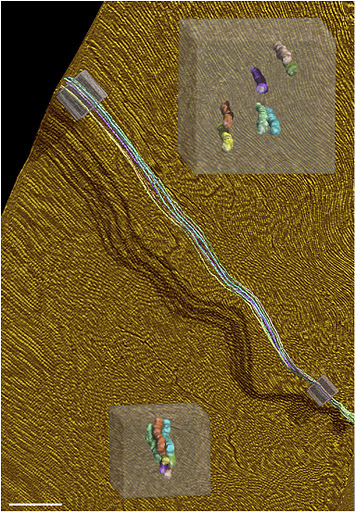
The things people can do these days. Therese Huldtgren and colleagues reported in last week’s Science that they identified nucleus-like structures in 570 million year old fossilized cells from China. These date to the Ediacaran period, before the “Cambrian explosion” of animal life forms. Superficially, these fossilized balls of cells rather resemble the early stages of animal embryos (see A in the figure below), in which cells are dividing and increasing in number but the overall embryo size stays the same. To get the inside story, Huldtgren and team used very fancy “synchrotron x-ray computed tomography” to look at the insides of these fossilized cells. The resulting images have micrometer resolution – that’s one thousandth* of a millimeter. The things people can do these days.

Fig. 2 from Huldtgren et al. 2011

And lo! each of these fossilized cells contains a small, globular structure that looks like a nucleus (left; if you cross your eyes you can merge the 2 halves of fig. C to make it look even more 3D).

Could these really be the earliest animal embryos? Probably not – some of these balls-of-cells had what resemble budding spores, unlike animals but similar to “nonmetazoan [non-animal] holozoans.” In other words, something neat and old, but not one of our earliest ancestors.

I’m really impressed with the biological applications of computed tomography (CT). Recall that a while ago, I posted about the potential to use synchrotron tomography to examine the small-scale, internal structure of bone (e.g. Cooper et al. 2011). Such non-destructive, high-resolution imaging techniques could be used to compare near-cellular-level growth in living and fossil animals. This is really significant because it adds a completely new kind of information we can get from fossils, which before now could only be studied well at the gross, macroscopic level (though scanning electron microscopy of teeth has been very informative about diet; see for example Ungar and Sponheimer 2011). Indeed, one of the most common applications of CT imaging in anthropology is making 3D computer models of body parts for morphometric (shape) analysis.

But high-resolution, synchrotron CT imaging opens up a whole new world of paleontology, new questions that can be asked. For example, many researchers have examined the microscopic appearance of bone surfaces to determine whether bone was being added or removed during growth, and comparing different species (Bromage 1989, O’Higgins et al. 2001, McCollum 2008, Martinez-Mata et al. 2010). These have been very informative studies, but it is not totally clear how growth at the cellular level relates to growth at visible level. Moreover, fossil surfaces are often abraded, obfuscating surface details. So, I can envision using synchrotron microscopy similar to Cooper et al. (2011) and Huldtgren et al. (2011), to examine bone growth in fossil hominids, at and beneath the surface. This can help us understand how facial growth was modified over the course of human evolution, from the snouty visage of Australopithecus afarensis to the tiny, starry-eyed faces we have today. People could also examine how activities like chewing, running or even talking affect (and effect) bone growth. There is much work to be done.

ResearchBlogging.orgNeat as these projects would be, it’s pretty humbling to consider that we have the technology to analyze microscopic fossils hundreds of millions of years old, and shed light on the developmental processes in our earliest ancestors.

Read those things I’d mentioned

BROMAGE, T. (1989). Ontogeny of the early hominid face Journal of Human Evolution, 18 (8), 751-773 DOI: 10.1016/0047-2484(89)90088-2

Cooper, D., Erickson, B., Peele, A., Hannah, K., Thomas, C., & Clement, J. (2011). Visualization of 3D osteon morphology by synchrotron radiation micro-CT Journal of Anatomy, 219 (4), 481-489 DOI: 10.1111/j.1469-7580.2011.01398.x

Huldtgren, T., Cunningham, J., Yin, C., Stampanoni, M., Marone, F., Donoghue, P., & Bengtson, S. (2011). Fossilized Nuclei and Germination Structures Identify Ediacaran “Animal Embryos” as Encysting Protists Science, 334 (6063), 1696-1699 DOI: 10.1126/science.1209537

Martinez-Maza, C., Rosas, A., & Nieto-Diaz, M. (2010). Brief communication: Identification of bone formation and resorption surfaces by reflected light microscopy American Journal of Physical Anthropology, 143 (2), 313-320 DOI: 10.1002/ajpa.21352

McCollum, M. (2008). Nasomaxillary remodeling and facial form in robust Australopithecus: a reassessment Journal of Human Evolution, 54 (1), 2-14 DOI: 10.1016/j.jhevol.2007.05.013

O’Higgins, P., Chadfield, P., & Jones, N. (2001). Facial growth and the ontogeny of morphological variation within and between the primates Cebus apella and Cercocebus torquatus Journal of Zoology, 254 (3), 337-357 DOI: 10.1017/S095283690100084X

Ungar, P., & Sponheimer, M. (2011). The Diets of Early Hominins Science, 334 (6053), 190-193 DOI: 10.1126/science.1207701

Ancient DNA & admixture: One of Science’s breakthrough in 2011

The high-profile journal Science has compiled a list of the top breakthroughs of 2011, some of the most major discoveries and and advances across scientific fields. The top breakthrough was research finding that antiretroviral drugs can act not only to treat patients infected with HIV, but also these antiretrovirals significantly reduce the likelihood of transmission of the disease. This is a pretty effing big deal, as HIVand AIDS are tragically rampant in many parts of the world.

One of the runners-up to this breakthrough: “Archaic Humans’ DNA lives on.” The brief exposé highlights the studies from this year that corroborated the 2010 evidence for Neandertal and “Denisovan” DNA in living people. The exposé concludes with a short and rather out-of-the-blue paragraph about the Australopithecus sediba fossils from Malapa. How about that – anthropological research as a major scientific breakthrough; FL governor Rick Scott certainly didn’t see that one coming.

ResearchBlogging.org
See for yourself:
Anonymous (2011). The Runners-Up Science, 334 (6063), 1629-1635 DOI: 10.1126/science.334.6063.1629

Small-stranded insanity inside your cells

The Nature News Blog posted a fascinating video showing how RNA interference (RNAi) works within a cell. RNAi refers to the regulation of gene expression by short-length RNAs. So far as I understand it, there are a number of types of small stretches of RNA (e.g. siRNApiRNA) that do not code for proteins but rather target other RNAs, and then latch onto them via proteins to ensure the other RNA’s demise.  RNAi is implicated in expression of lots of genes, for instance HOTAIR is a long intergenic noncoding RNA that is itself located in the HOXC cluster but later acts to repress HOXD expression (Woo and Kingston 2007).

The video (there’s also a slideshow) provides a stunning and digestible visual of what exactly is going on during this complex process. It’s online and it’s completely free (see links above), and so could be a valuable resource for teaching about this aspect of gene regulation.

Oh, the humanity. An Argonaute protein is guided by a small interfering RNA to where it will start rending a messenger RNA. From this great slideshow by Nature Reviews Genetics and Arkitek.


ResearchBlogging.org
Some RNAi reviews
Czech, B., & Hannon, G. (2010). Small RNA sorting: matchmaking for Argonautes Nature Reviews Genetics, 12 (1), 19-31 DOI: 10.1038/nrg2916

Moss, E. (2001). RNA interference: It’s a small RNA world Current Biology, 11 (19) DOI: 10.1016/S0960-9822(01)00467-5

Woo, C., & Kingston, R. (2007). HOTAIR Lifts Noncoding RNAs to New Levels Cell, 129 (7), 1257-1259 DOI: 10.1016/j.cell.2007.06.014

Anton Wutz (2011). RNA-Mediated Silencing Mechanisms in Mammalian Cells Progress in Molecular Biology and Translational Science, 101, 351-376 DOI: 10.1016/B978-0-12-387685-0.00011-1

UPDATE: The Journal of Experimental Zoology B has an entire issue dedicated to “RNA in Developmental Evolution.”

Humans and snakes, beyond the Garden

There’s a paper in press in PNAS describing human-snake relations among Agta hunter-gatherers in the Philippines. The paper is pretty neat, as it describes a pretty complex relationship between, in this case, reticulated pythons and humans (and generally between other snakes and primates). Humans have been attacked (and presumably eaten) by large pythons. Conversely, Agta have killed and eaten pythons. There is also a good deal of overlap in prey species eaten by humans and pythons. So at once, the relationship between humans (at least the Agta) and pythons could be described as predator-prey, prey-predator and competitors; given this dynamic, maybe Genesis readers should be more surprised that Eve and the serpent didn’t try to eat one another.

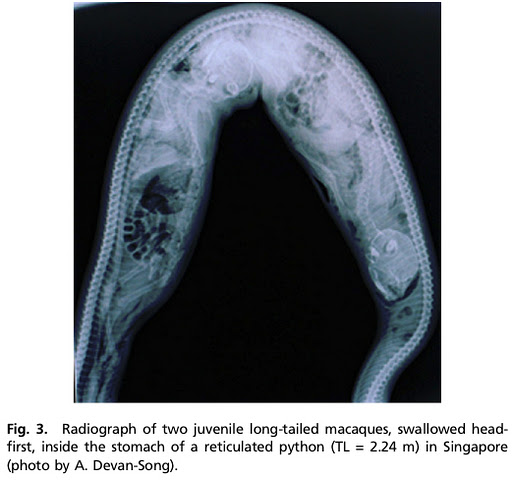
The paper also has some great pictures of a huge python that was killed and flayed by an Agta group in the early 1970s (more in info here in Science). At right is another sweet pic from the paper, an X-ray of a snake that has swallowed whole TWO juvenile monkeys!

On the far right you can clearly see the head and spine of one, and on the left half by the ‘bend’ in the snake you can see the head, spine and upper limb of the other, its legs visible in the bottom left corner. Nuts!

The authors write that because of the swallow-whole style that pythons ingest their prey, it may be impossible to determine whether fossil hominids fell prey to such a swallowing serpent. But I think this is itself a potentially testable hypothesis. If the snake X-rayed above was alive, researchers could have waited for the snake to expel its stomach contents, to see if death-by-python leaves any special signatures on the skeleton. Stomach acids the used by the snake to digest prey may leave a special mark on bone; because constricting snakes usually squeeze the ** out of their prey to subdue them, this could result in a characteristic pattern of bone breakage [Briana Pobiner and colleagues (2007) did a similar study based on the skeletal aftermaths of chimpanzee hunts]. So if we know what a snake’s primate meal looks like when vacated, we could potentially see if there are any such serpentine signatures in the fossil record. Assuming that swallowed-by-snake could be detected, even if no fossil hominids (or apes and monkeys, for that matter) bear such signatures, that doesn’t mean it didn’t happen, but simply that we can’t say for sure whether it did.

References


Headland, T., & Greene, H. (2011). PNAS Plus: Hunter-gatherers and other primates as prey, predators, and competitors of snakes Proceedings of the National Academy of Sciences DOI: 10.1073/pnas.1115116108

Pobiner, B., DeSilva, J., Sanders, W., & Mitani, J. (2007). Taphonomic analysis of skeletal remains from chimpanzee hunts at Ngogo, Kibale National Park, Uganda Journal of Human Evolution, 52 (6), 614-636 DOI: 10.1016/j.jhevol.2006.11.007

The next big thing? Automated methods in biology, or "Hooked on phenomics"

“This is very beautiful. It is neat, it is modern technology, and it is fast. I am just wondering very seriously about the biological validity of what we are doing with this machine.” – Melvin Moss, 1967*

“This machine” to which Moss referred nearly 50 years ago was not a contraption to clone a Neandertal or a Godzilla-like MechaGodzilla, but a computer. Along these lines, a paper came out recently describing a new, automated method for analyzing (biological) shapes, and while I think the method is pretty sweet, I think future researchers employing it should keep Moss’s monition in mind.

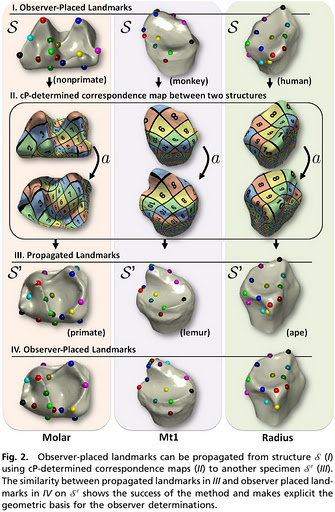
Doug Boyer and colleagues (2011) present “Algorithms to automatically quantify the geometric similarity of anatomical surfaces.” It seems the main goals of the study were to make shape analysis [1] faster and [2] easier for people who don’t otherwise study anatomy (such as geneticists), making it possible [3] to amass large phenotypic datasets comparable to the troves of genetic data accumulated in recent years. Using some intense math that’s way over my head, the computer algorithm takes surface data (acquired through CT or laser scans) of a pair of specimens and automatically fits these forms with a “correspondence map” linking geometrically (and not necessarily biologically) homologous features between the two. It then uses the map to fit landmarks (a la geometric morphometrics) which are used to calculate the shape difference metric between individuals in the pairings.

See at the right just how pretty it is! The authors posit that this technique could be used with genetic knock-out studies to assess how certain genes affect the development of bones and teeth, or to model the development of organs. That certainly would be useful in biomedical and evo-devo research.

But while I appreciate the automated-ness of the procedure, I don’t think we can simply write off the role of the biologist in determining what features are homologous, in favor of a computer. The paper itself illustrates this nicely. The authors state that there is debate about the origins of a cusp on the molar tooth of the sportive lemur (Lepilemur) – is it the same as the entoconid of the living mouse lemur, or the enlarged metaconid of the extinct “koala lemur”? Their automated algorithm can map the sportive lemur’s mystery cusp to match either alternative scenario. It is the external paleontological and phylogenetic evidence, not the intrinsic shape information, that renders the alternative scenario more plausible.

ResearchBlogging.org
So let me reiterate that I think this paper presents an important step for the study of the biology of form, or the form of biology. Automating the analysis of form will certainly expedite studies of large datasets (not to mention freeing up the time of hordes of research assistants). But I hope that researchers employing this procedure will have a little Mossian Angel (poor play on “guardian angel,” sorry) on their shoulders, reminding them that the algorithm won’t necessarily show them homology better than their own experience. And I hope all biologists have this Mossian Angel there, reminding them that even though this method is “neat … modern technology, and … fast,” it may not be the most appropriate method for their research question.

References
Boyer, D., Lipman, Y., St. Clair, E., Puente, J., Patel, B., Funkhouser, T., Jernvall, J., & Daubechies, I. (2011). Algorithms to automatically quantify the geometric similarity of anatomical surfaces Proceedings of the National Academy of Sciences, 108 (45), 18221-18226 DOI: 10.1073/pnas.1112822108

*This quote comes from a discussion at the end of a symposium: Cranio-Facial Growth in Man (1967). RE Moyers and WM Krogman, editors. New York: Pergamon Press.

The secret to running an amazing race: show up late

I don’t usually stray far from the Sciences and into my personal life on this blog, because I wouldn’t want anyone to get the impression that I have a life or actually do stuff. But not today. Today I wanna talk about one of my favorite things: running.

On Thanksgiving I ran the Detroit Turkey Trot 10k race with some friends (couldn’t make it home to be with my awesome family this year, unfortunately). It was a cold and foggy morning, perfect for a race starting at 7:45 am. Knowing that over 20 thousand people would be in downtown Detroit just for the races (there was also a 5k and 1-miler), we peaced out of Ann Arbor at 6:00 to make sure we’d get to the starting line on time. But in a combined assault of incompetence, the City of Detroit and The Parade Co. made sure this would be impossible. After crawling from I-94 into downtown, we got the car parked with about 10 minutes to drain everyone’s bladder (it’s important to be properly hydrated for physical activity) and join the 7500 other runners doing the 10k. Race organizers had the foresight to make sure there were a whopping 10 Porta Potties near the starting line, perfectly adequate to serve the 20,000+ runners and onlookers; it was a long line.

My race bib, next to my sexy dinosaur poster and classy Kokoschka tiger-cat.
So much product placement.

So, we finally got to the starting line about 15 minutes after the race began. FORTUNATELY science and technology were on our side, and some benevolent genius thought to invent chips that go in one’s race bib (right) so that one’s official time does not begin until one crosses the start line.

Being young and brash, we were hoping to start with the faster “comet” or “Wave 1” group, which started earlier than the other waves. Having to start the race some 15 minutes later than scheduled, you’d think we’d’ve been off to a bad start – FALSE! Because our wave got a head start on us, we ended up running alongside the slower waves, meaning that we spent literally the entire race passing people. Unlike every other race I’ve done (where I started on time), no one passed me for all 6.2 miles, which was a real morale booster. This ended up being my fastest 10k (and really the fastest of the brief history of all my races)

Nothing makes you run faster than feeling like you’re a fast runner. So if you want to have an amazing race (not the show), start late.

Updated note on jaw growth in Australopithecus robustus

A few weeks ago I posted some early observations I’ve made about mandible growth in Australopithecus robustus compared with humans. My dissertation tests the null hypothesis that overall mandible growth is identical in the two species. This is complicated by the fact that there are many aspects of jaw growth (i.e. lots of variables) and not all fossils preserve the same parts. In these early preparatory stages I’m looking only at the height and width of the jaw at the second baby molar (in kids) and the second permanent premolar that replaces this baby tooth in older individuals, since this is something most of the fossils have. This work will get me ready for the hard comparisons, where the fossils aren’t so kind.

One concern I had in the earlier post was that my human sample was (and still is) fairly small, making comparisons rather tentative. Since then, I have about doubled my human sample (but I still have lots of work to do), so it’s timely to see if my earlier observations have held up. AND THEY DO!

To the right is a plot of jaw height at said tooth position across the growth period, humans being the black circles and A. robustus the thick red ones. Note that measures are standardized, taken relative to the smallest (not necessarily the youngest) individual in each sample. Before, I’d found that the two samples overlapped up to dental stage 4 (when the first permanent tooth comes in). After this point, the A. robustus jaw gets much larger through early adulthood, whereas in humans the height increase isn’t so drastic. With a larger sample, there is a bit more overlap in relative jaw height (especially early on), but the overall result is the same as I found earlier. Neat!

To the left is a similar plot, this time looking at width of the jaw across the growth period (these are also size-standardized as above, colors are the same). What’s remarkable is that the width of the human jaw is pretty much the same from infancy to adulthood. I remember thinking this when I first started looking at human jaws early last summer, but I’d never looked at how they compare with A. robustus, whose jaw continues to increase in absolute and relative width with age (and possibly even through adulthood; Lockwood et al. 2007). This plot is admittedly a bit confusing, as sizes are measured relative to the smallest and not youngest individuals, and the narrowest human jaw is in dental stage 4. The A. robustus sample also includes a very old adult (the highest point on the plot) while the human sample only goes to early adulthood. But the basic patterns are still pretty different: A. robustus jaws get wider up to dental stage 5 (you could think of it as pre- or early adolescence) then level out (not including our large older adult), but humans’ average jaw width is fairly constant throughout ontogeny. Of course, this is at only one position along the jaw, and others will probably different.

The fragmented jaws of the youngest A. robustus (i.e. SK 63 and SK 438) do not look too different from their human counterparts, but adults are very different. Here we can see part of the reason why. Bear in mind, though, that other aspects of mandible shape do differ between these species from birth. For example, humans have a bony chin from infancy, whereas A. robustus always lacks a true chin (SK 74 is an older, probably female adult A. robustus that does have a rather anomalous “chin” but it is not homologous to ours). Not all aspects of species-specific mandible shape arise during postnatal growth!

ResearchBlogging.org
But there you go, an enlarged human sample produces a result consistent with my earlier observation. Note that these pictures do not represent statistical tests of my hypothesis! Yes, a visual inspection of the plotted numbers suggests the two species differ in how jaw height and width grows. But saying something statistical and “definitive” is difficult. In terms of height, growth does seem pretty much the same during childhood, but then divergent later on. Width growth in the two species seems totally different. To further complicate things, a “shape” ratio of jaw width divided by height (not shown) suggests parallel (but not identical) growth trajectories in the two species. What do these observed differences mean for the null hypothesis? Which and how many variables can differ before I can feel confident about whether to reject the hypothesis? Oy, I have my work cut out for me. Stay tuned!

That paper I referenced
Lockwood, C., Menter, C., Moggi-Cecchi, J., & Keyser, A. (2007). Extended Male Growth in a Fossil Hominin Species Science, 318 (5855), 1443-1446 DOI: 10.1126/science.1149211